
Travel FromAtoZ — Lijiang, Yunnan, China
We’d been in Yunnan for a few days by this point, Dali behind us, and now in Lijiang and we are already realising that the food here is something else entirely. Not what most people picture when they think of Chinese cuisine. Brighter, more herbal, sour in all the right places.
So when we stumbled on a cooking class that started with a market tour, we didn’t think twice.
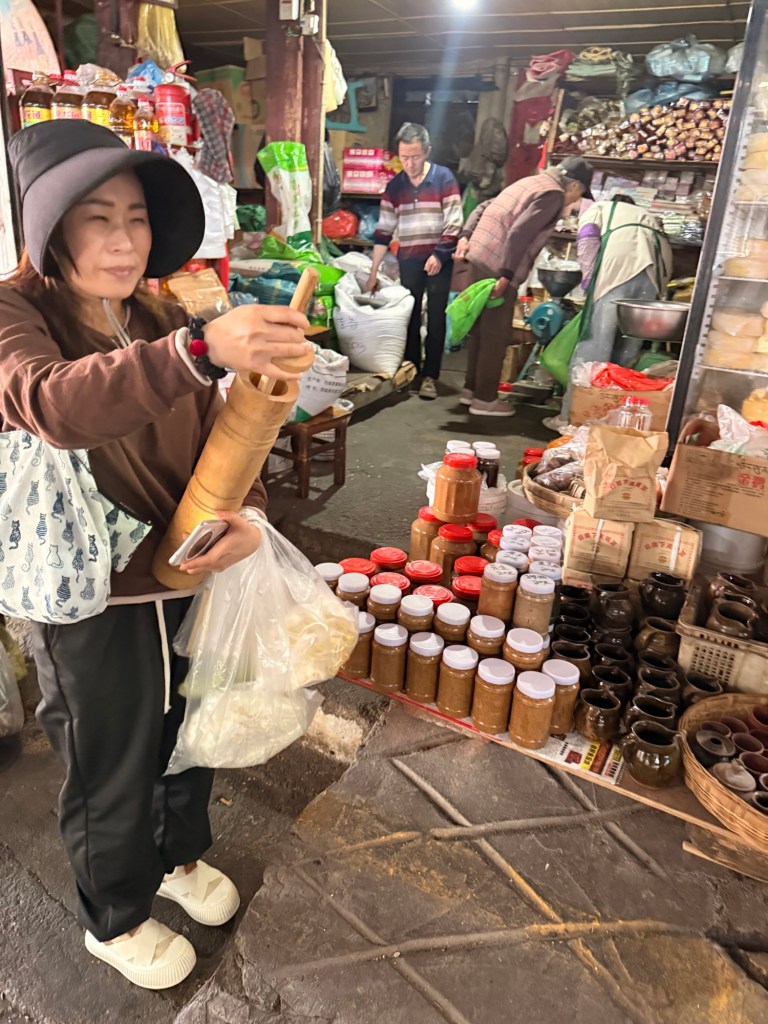
The Market First
Before we touched the pots and knifes, our host Maggie, originally from Taiwan, with deep knowledge of Yunnan’s food culture and the kind of clear, detailed English that makes you actually learn things, took us through Lijiang’s oldest wet market. This is not the tourist market. This is where locals shop at 8am, where the produce comes in that morning, and where you start to understand what Yunnan cooking is actually built on.
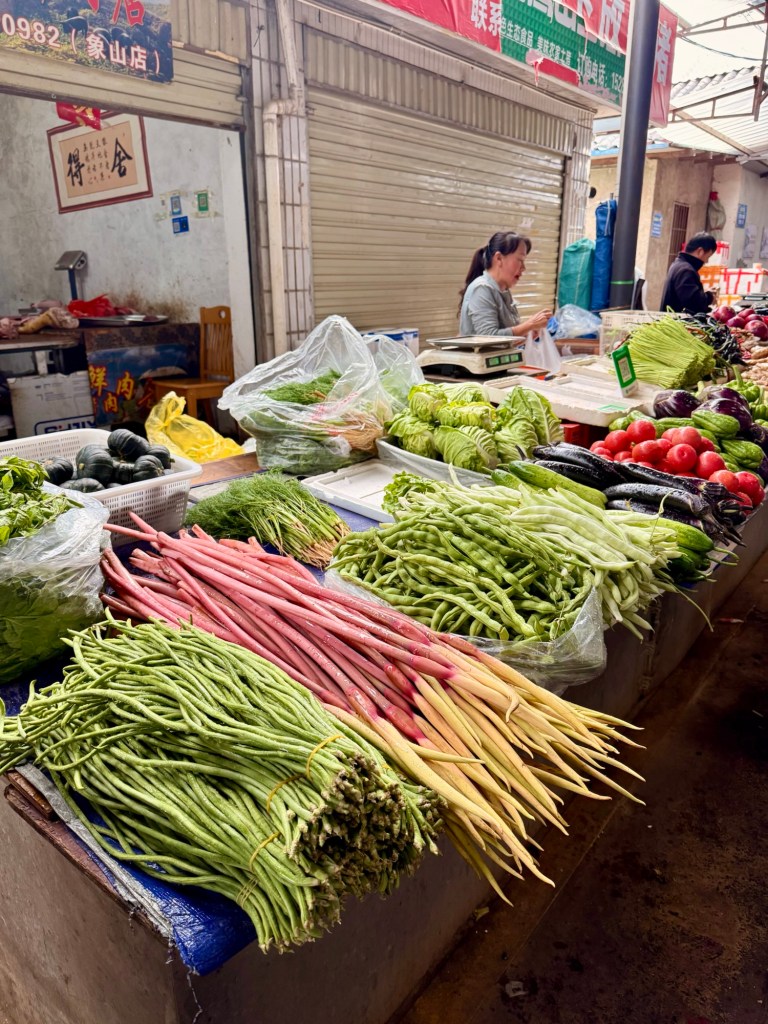
Maggie explained which ingredients belong to which of Yunnan’s many minority communities. Lijiang sits at a crossroads of Naxi, Bai, Tibetan and Yi culture, and you can taste all of it if you know what to look for.
And we were able to point out the ingredients of dishes we have tried over the past days in Yunnan. What an experience to see all this great local and seasonal produce, and the quality was just amazing.
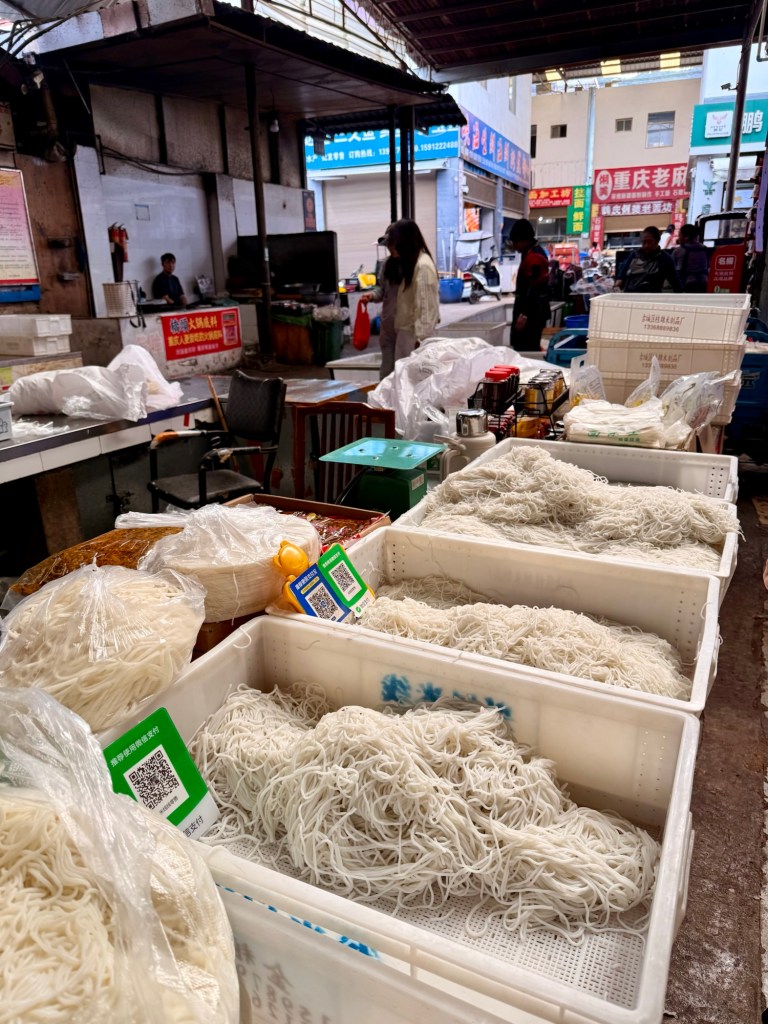
Then the noodles. Great crates of freshly made rice noodles, soft and silky, sold by the portion. Seeing them here made the dish we were about to cook feel completely different. These aren’t pantry noodles. They’re made that morning, and that matters.
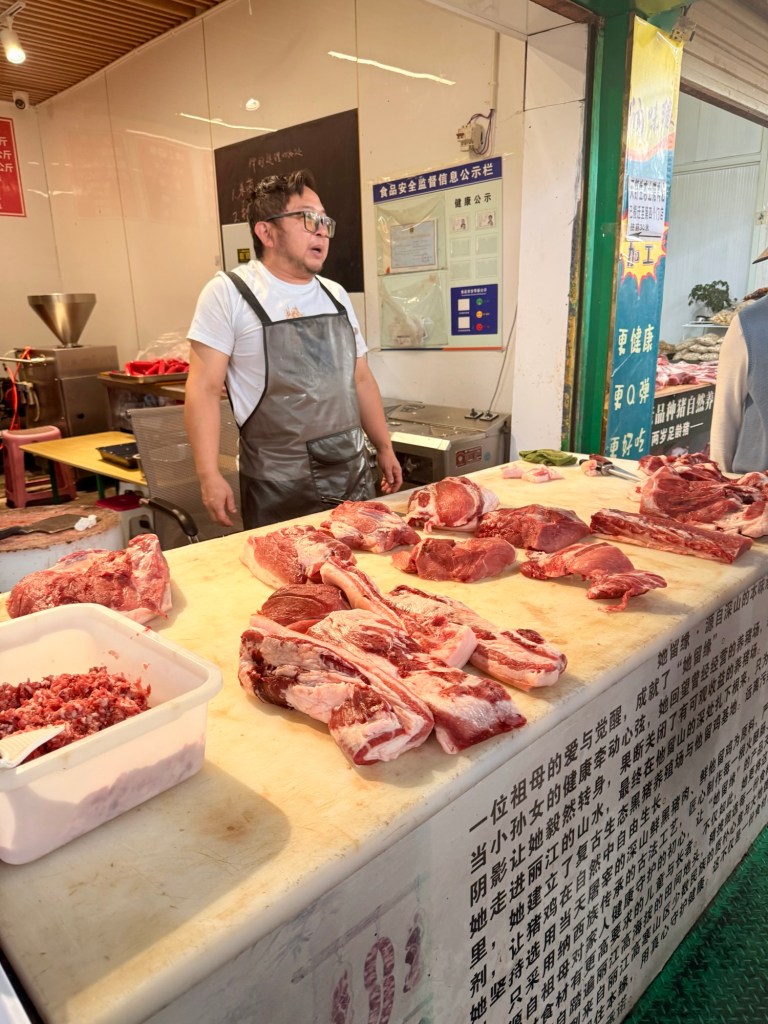
At the butcher’s, we learned about Yunnan’s famous black pig, a mountain breed, slower to raise (24 months compared to usual 12 months), richer in flavour. The text on the counter told the story of the woman who runs the stall and her commitment to keeping traditional farming alive. It’s the kind of thing that gets lost in the western supermarkets.
Yak Butter Tea
Before heading to the kitchen, Maggie handed us a cup of yak butter tea. A Tibetan tradition, warming and nourishing at altitude. We’ll be honest, it’s salty, fatty, and nothing like any tea you’ve had before. Interesting is probably the most accurate word. Definitely worth trying once, even if your second cup might be a coffee.
Into the Kitchen
The kitchen is modern, bright and beautifully organised. Everything was prepped and laid out before we started, bowls of fresh mint, cilantro, chopped chives, ginger, garlic, sliced lemon, chicken thigh, rice noodles. It already looked like a meal before we’d done anything.
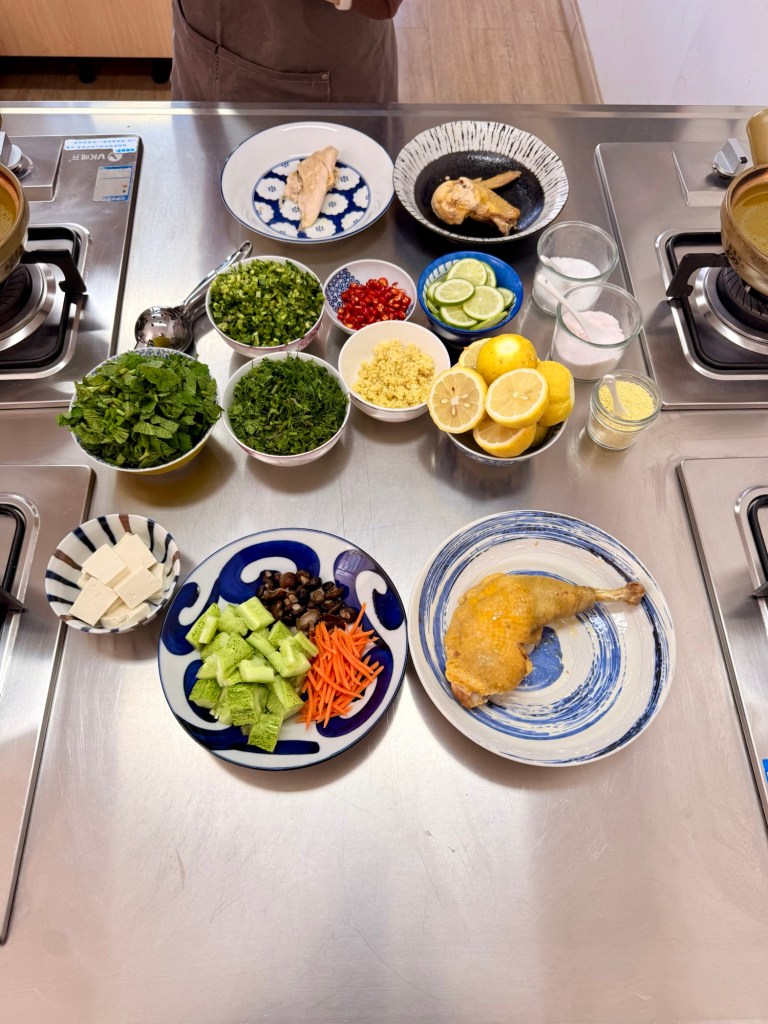
What made the class special was Maggie’s approach. She didn’t just show us what to do, she explained why. The layering of the broth base before anything else goes in.
The dishes came together fast, and there’s something deeply satisfying about watching it all come together, the tomatoes breaking down, the pickled cabbage releasing its tang, the noodles dropping in at the last moment.
What We Made
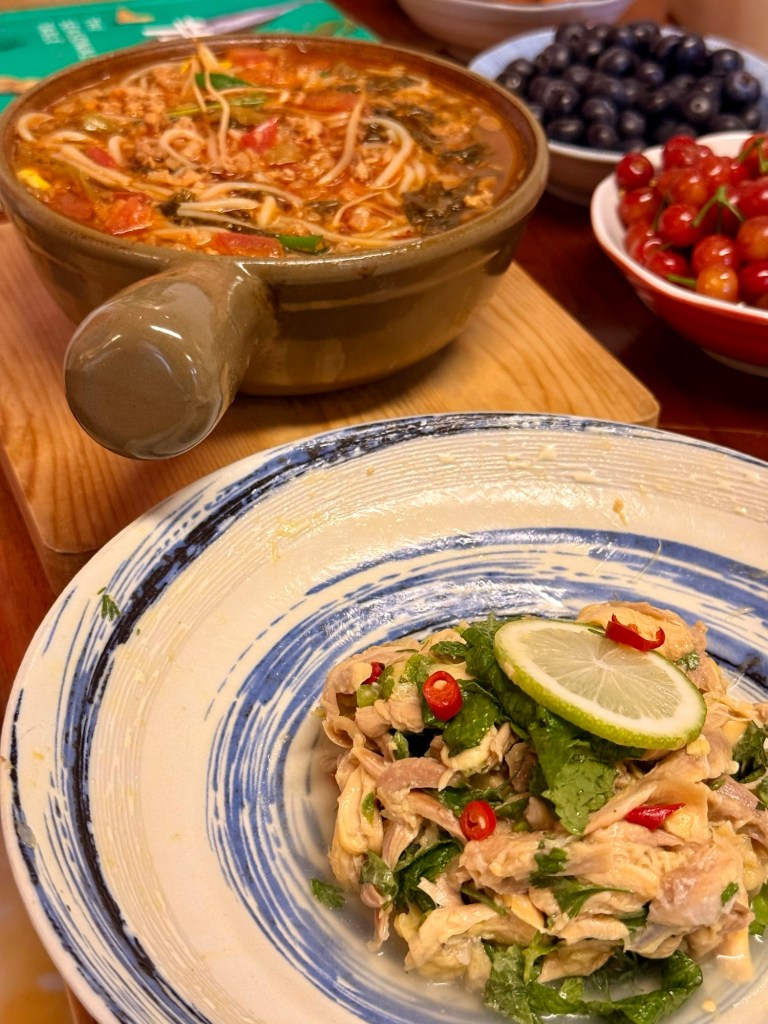
Three dishes. All of them quick and easy to make, with loads of depth in flavor and typical Yunnan food.
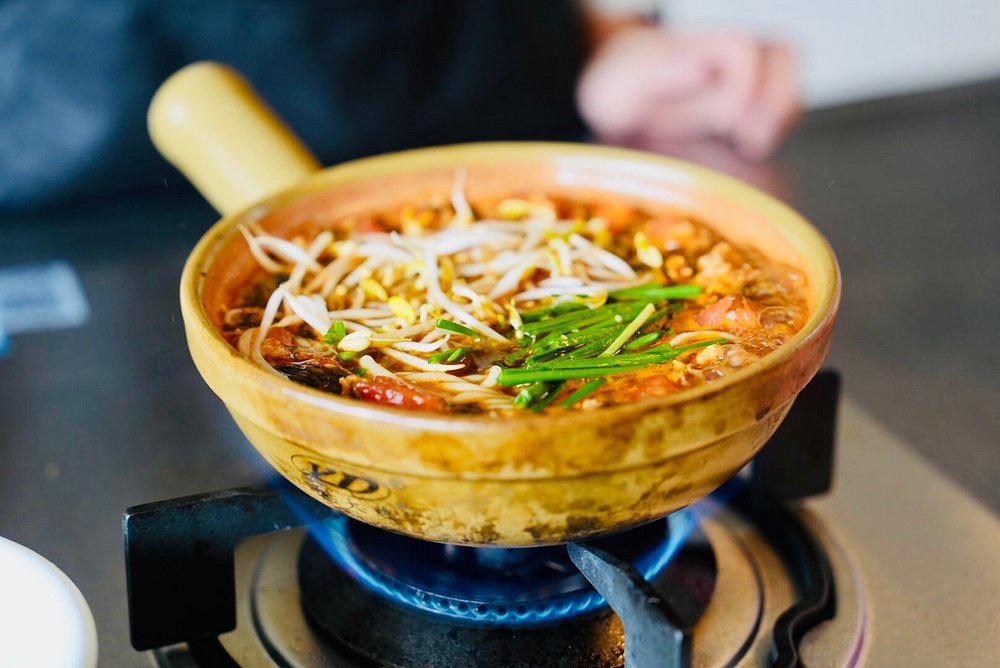
Yunnan Little Pot Rice Noodles (云南小锅米线) the dish Yunnan is famous for. Sour, savory, warming, with that fermented home made soy paste depth that’s hard to replicate. Served in the little clay pot it was cooked in.
Herb Chicken Salad (凉鸡) the one that surprised us most. Shredded boiled chicken tossed with mint, cilantro, ginger, garlic, red chili and lemon. No dressing to speak of, just aromatics doing all the work. Cool and punchy.
Palosda (泡鲁达) a Yunnan dessert we’d never heard of before this trip. Coconut milk, purple rice, sago, fresh mango, shredded coconut and condensed milk, layered into a bowl. Somewhere between a drink and a dessert.
Book it
This is genuinely one of the best things we did in Lijiang. Maggie is kind, knowledgeable, and speaks excellent English, the explanations throughout the market and the kitchen are detailed without being overwhelming. The whole morning runs around 3–4 hours.
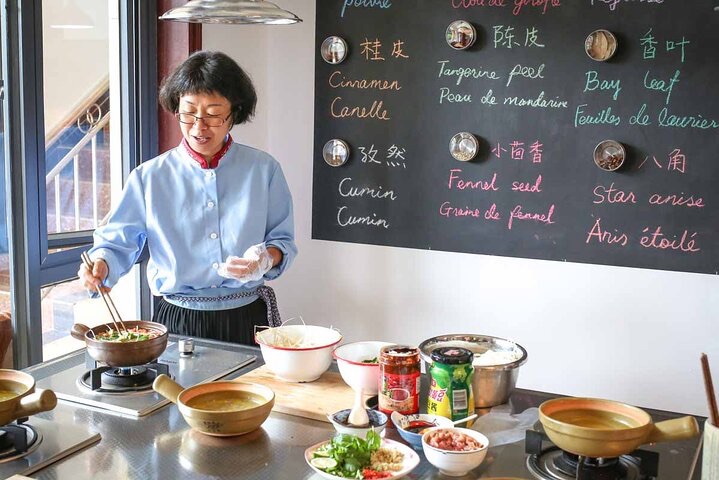
👉 Find it on TripAdvisor here — currently rated 5/5. Fully deserved.
One More Reason to Go: The Bakery
Right next door to the kitchen is Fancy’s other project, a French-style bakery that she also runs.
The croissants here are made with proper technique. The yak cheese croissant is rich and slightly funky in the best possible way, yak dairy has a depth to it. The pork floss croissant is the kind of sweet-savory combination that sounds unusual until you take a bite and immediately want another. Flaky, buttery layers with that soft, slightly sweet dried pork on top. It really works.
Honestly, the bakery alone is worth seeking out in Lijiang. That it’s attached to one of the best cooking experiences in town makes it even better. Go after the class, when you’ve still got room.
Stay tuned for our own versions of the dishes, where we add our AtoZ touch the Yunnan recipes.


Laat de recepten maar komen
LikeLike